
Interpersonal Process Therapy Groups
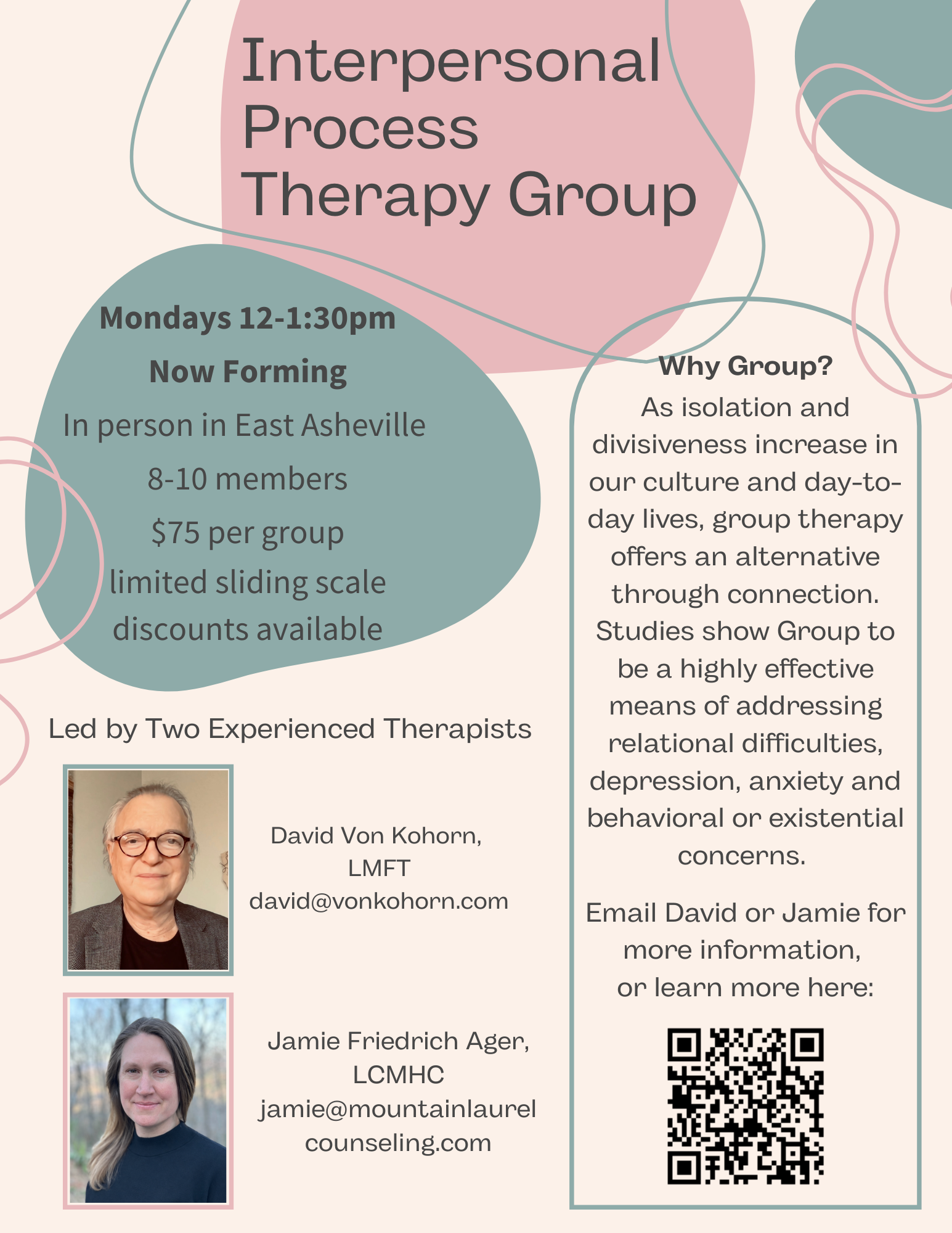
New Group Forming Now
About Group Therapy
As the rates of divisiveness and isolation increase in our culture and day-to-day lives, group therapy offers an alternative through connection. In a relational process group, members and therapists join together to explore, experience and share their thoughts and feelings in the here-and-now. While different from individual or couple therapy, group work can be powerful and equally effective.
Who may Benefit from Group Work?
Group is for anyone wanting to increase their connection and closeness in relationship with others—colleagues, friends, family members, lovers… and ultimately, themselves. Group is also for people who may perceive their struggles as non-relational—those wrestling with depression, anxiety, behavioral or existential concerns. It is also a highly effective modality for those who have been in individual therapy and wish to explore different avenues of change and growth, and new ways of relating to others.
Studies show that working in a present-moment, relationally oriented group is a powerful way to access one’s authentic and agentic (core) self. In essence, this journey can lead to self-realization, self-actualization and a sense of personal liberation.
What is Group Like?
While the structural elements of our groups are similar, the essence of each one is unique and evolves organically, shifting and emerging according to the hearts and minds of the members. It requires safety for this to unfold, safety and courage; the latter being possible only when the former is present. To this end we have two seasoned therapists as group leaders. While they help ground the group, they also provide ballast for each other.
Group members are encouraged to share their feelings, fantasies, and impulses as they arise in the present moment. As the safety of the harbor increases, members share more about themselves—their goals, hopes and dreams, and their fears, sorrows and stuck places.
By offering each other non-judgmental feedback and support, we find the courage to explore, understand, and gently dismantle the obstacles and unproductive patterns of coping that, although once useful in dealing with painful life events or childhood relationships, may now be keeping us from enjoying a more fulfilling life.
You can read about the intake process and tentative group guidelines here (pdf).
Does it Work?
Yes! There is ample research evidence to support that in many to most cases, group therapy is just as effective is individual therapy. It is also more cost effective for members.