meditation posture basics
This post is the first in a two-part series sharing the basics of zen-style, nondual oriented meditation. This first part will go into great detail about meditation posture and the second part will give instructions for a breath meditation practice. You can listen to an audio version of this post on my podcast (available on spotify or apple podcasts). You can also download this illustrated pdf summary for your reference. Please share these resources with anyone who might benefit.
In Zen, meditation is called zazen, which is a Japanese compound word. Za means “to sit.” Zen comes from the Chinese word Chan which comes from the word Jhana in Pali or Dhyana in Sanskrit. Dhyana mean “absorption” or “concentration.” So zazen means “seated absorption.” In the English speaking Zen world we say “sitting” to refer to meditation as well, as in “I’m going to go sit,” or “I’m going to go do zazen.”
Why Posture Matters
When sitting, we start with our posture to create a stable foundation for practice. A question that often comes up is, does my sitting posture really matter? It absolutely does. What you do with your body is going to have a profound impact on your practice overall. In fact, the way we sit is not separate from our practice. We don’t sit and then meditate, or sit so that we can meditate. We sit, and this is meditation, though there is more to zazen than blankly sitting there or letting the mind run wild. The body and mind works together as one.
Many people in Western countries grow up sitting in chairs for long periods each day, and using our bodies in ways that degrade our posture overall. If we do not exert attention and effort in how we sit, we are likely to find ourselves in pain while doing zazen, or in a position that is unsustainable and unsupportive of a long term practice. The way we use our bodies is of great importance. Taking the time to address posture, both as a beginner and throughout our practice life, is essential.
Practical, Not Perfect
There is no one right sitting posture, and no one way of sitting is inherently better than another. As with everything in Zen, we trust the wisdom of those who have gone before us while placing our faith in our own personal experience. Inquire for yourself: What position supports a clear and open body-mind? Experiment and find your own way.
It is also important to say that zazen is for every body. Folks who have physical, sensory, or developmental exceptionalities, who experience chronic pain, or who have current or past injuries may find that some of these posture instructions are not as relevant. You may find the general principles helpful and have to modify or ignore some of the specifics. It is of course possible to do zazen while reclining, lying down, standing, or in a variety of other nontraditional meditation postures, though concentration may require more effort under these conditions.
Any way you can find to practice will likely be impactful to you, your relationships, and the world. The aim is to find a posture you can maintain over a round of sitting and one that will support your practice over years— practical, not perfect. At the same time, I encourage you to take yourself and your practice seriously and sit with a spirit of discipline.
Basic Principles of Meditation Posture
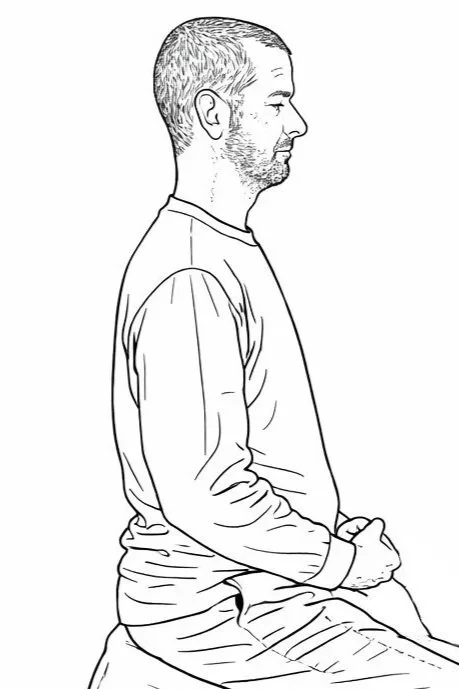
Will Johnson, in his book The Posture of Meditation, describes three foundational, interrelated aspects of meditation posture: alignment, relaxation, and resilience.
Alignment is related to the bones:
The spine has a natural curve.
Ears, shoulders and hips are stacked.
Crown of the head lifts so that the chin tucks in slightly; you might imagine a hook coming from the sky, gently lifting the crown of the head and lengthening the spine.
Shoulders are neutral, neither thrown back or hunched forward.
Hips are higher than the knees.
the pelvis should be in a neutral position— If it were a bowl of water, it would not spill forward or backward.
Relaxation is about the soft tissue. The bones form a kind of scaffolding that allows extra tension to release. You can briefly scan the body from top to bottom and allow it to relax.
Resilience means that the body is responsive and alive. We're right here, opening and responding to what arises. The body is sturdy but not rigid; flexible but not floppy.
Equipment and Environment
A sitting practice requires some basic equipment. A sturdy chair with a comfortable seat may suffice. Those who want to sit cross legged or to kneel will need a padded mat (zabuton) and a cushion or bench. You can use a round cushion (zafu) filled with either kapok (like a pillow) or buckwheat hulls (like a beanbag), or another kind of cushion that works for you. If it is possible to invest in items made specifically for meditation, this may better support the longevity of your practice. You can find many options online; I like Carolina Morning (no affiliation, just genuine appreciation).
When sitting, loose fitting clothes with a soft waistband seem to work best for most people. The specifics will depend on your anatomy and preference. Just be sure no part of the body is constricted by your clothing. Sit in a place with low sensory stimulation where you won’t be interrupted. It doesn’t need to be sterile or silent, but a simple, quiet space is ideal. It can be easiest to sit facing a wall.
Cross legged, Kneeling, and Chair-Based Postures
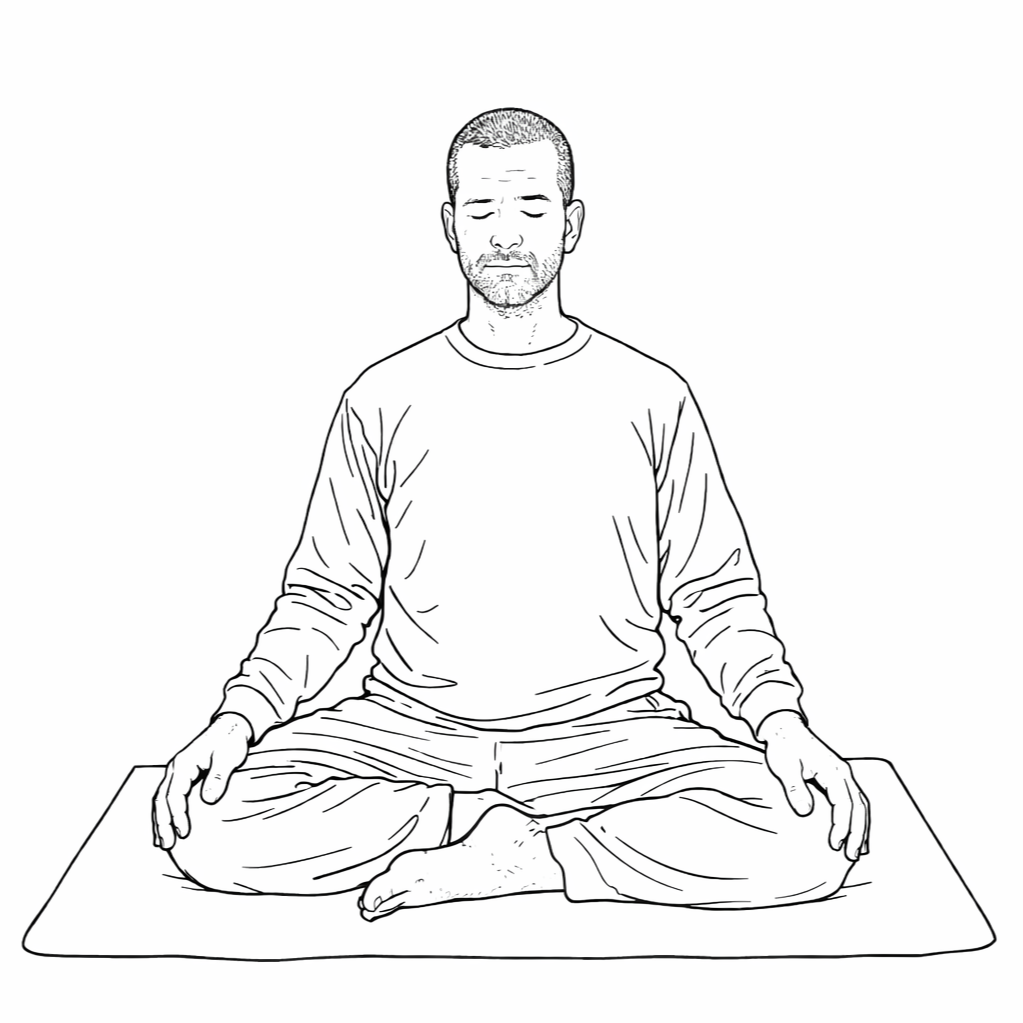
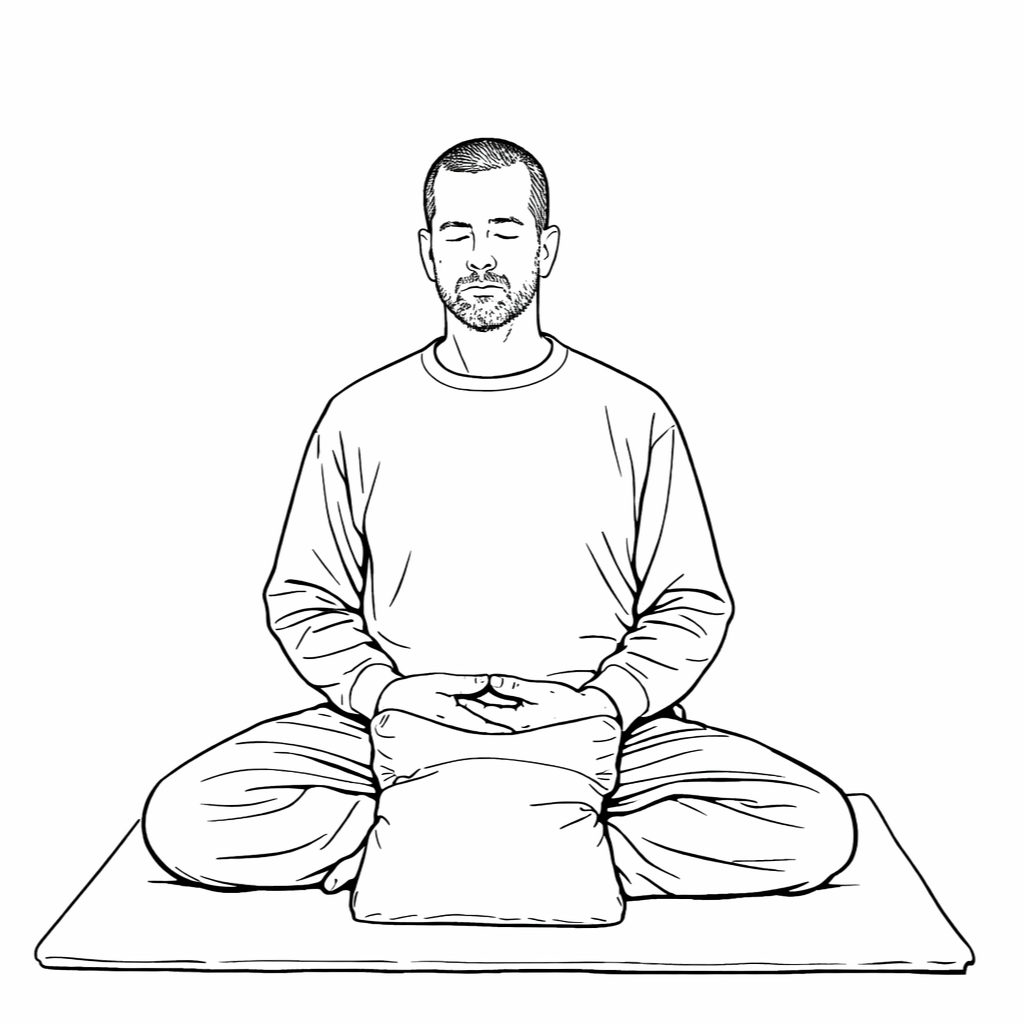
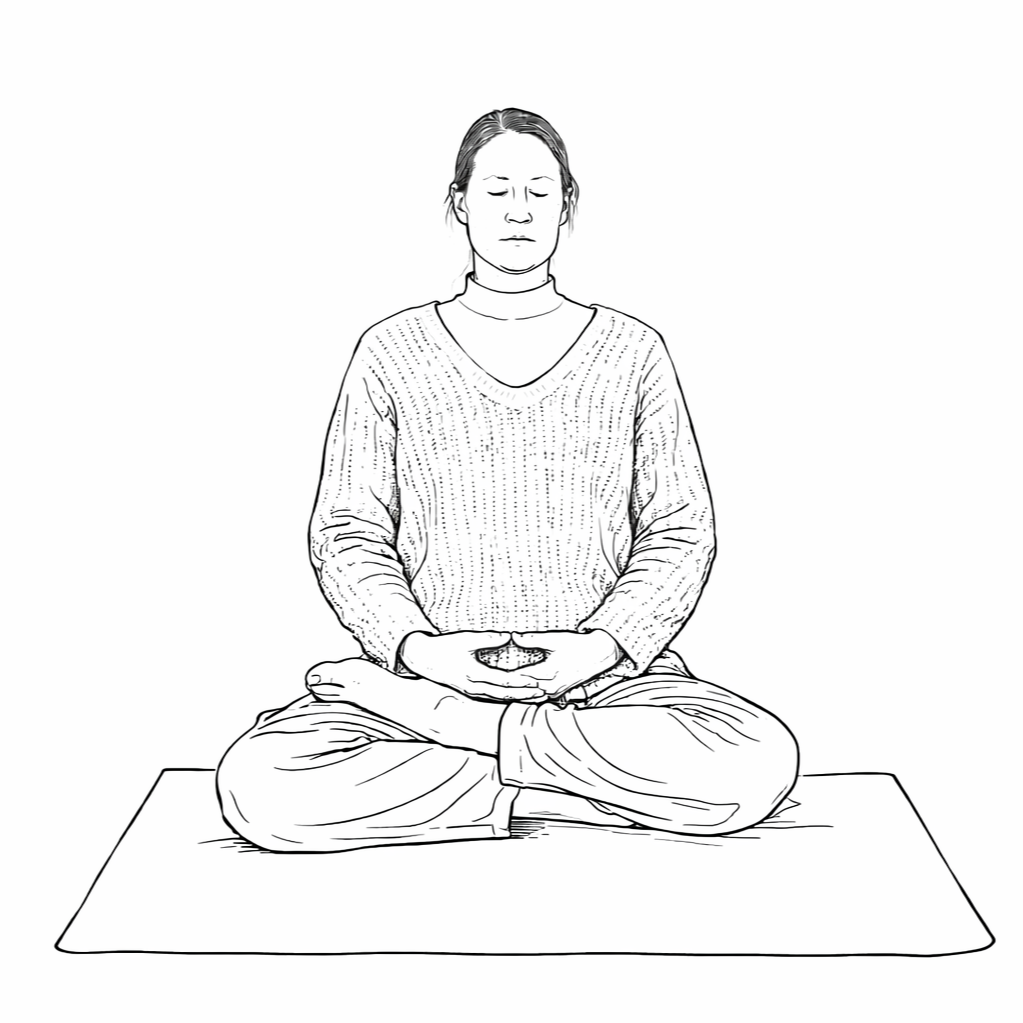
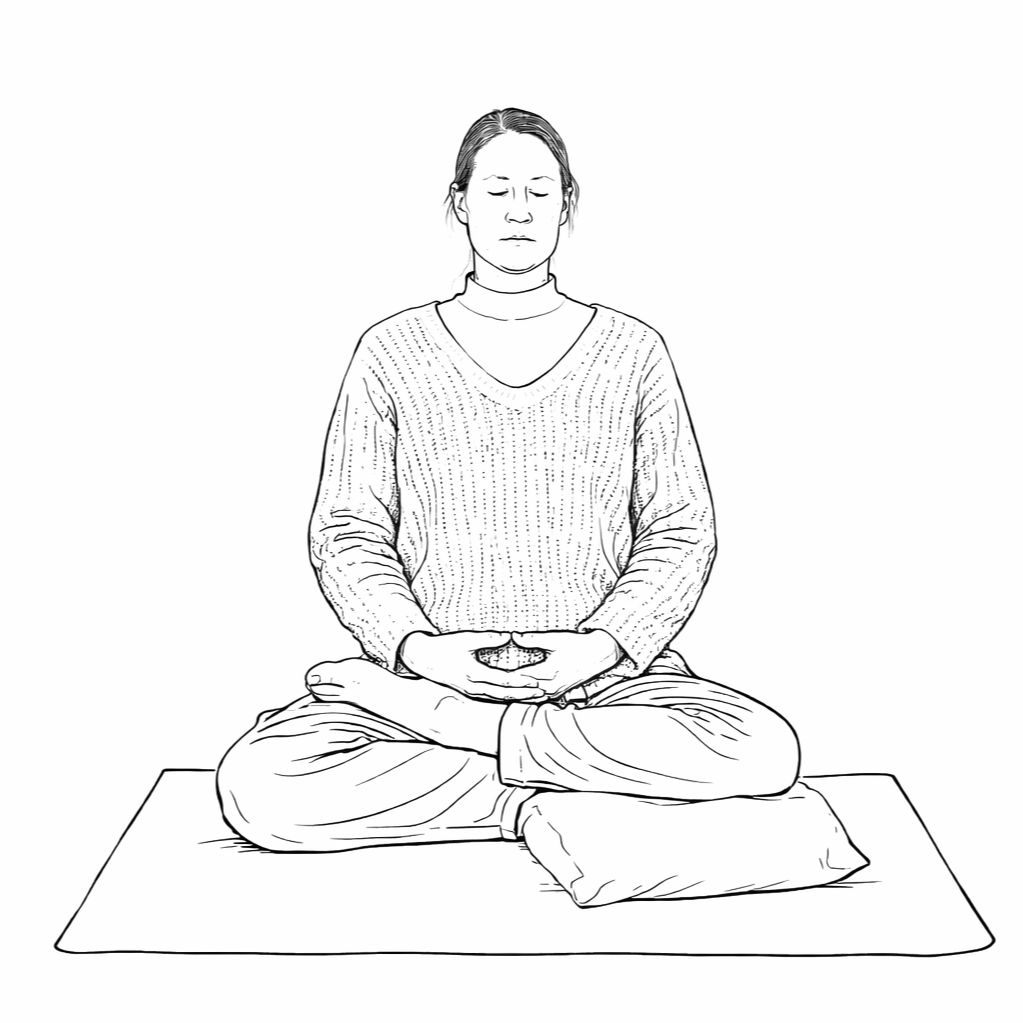
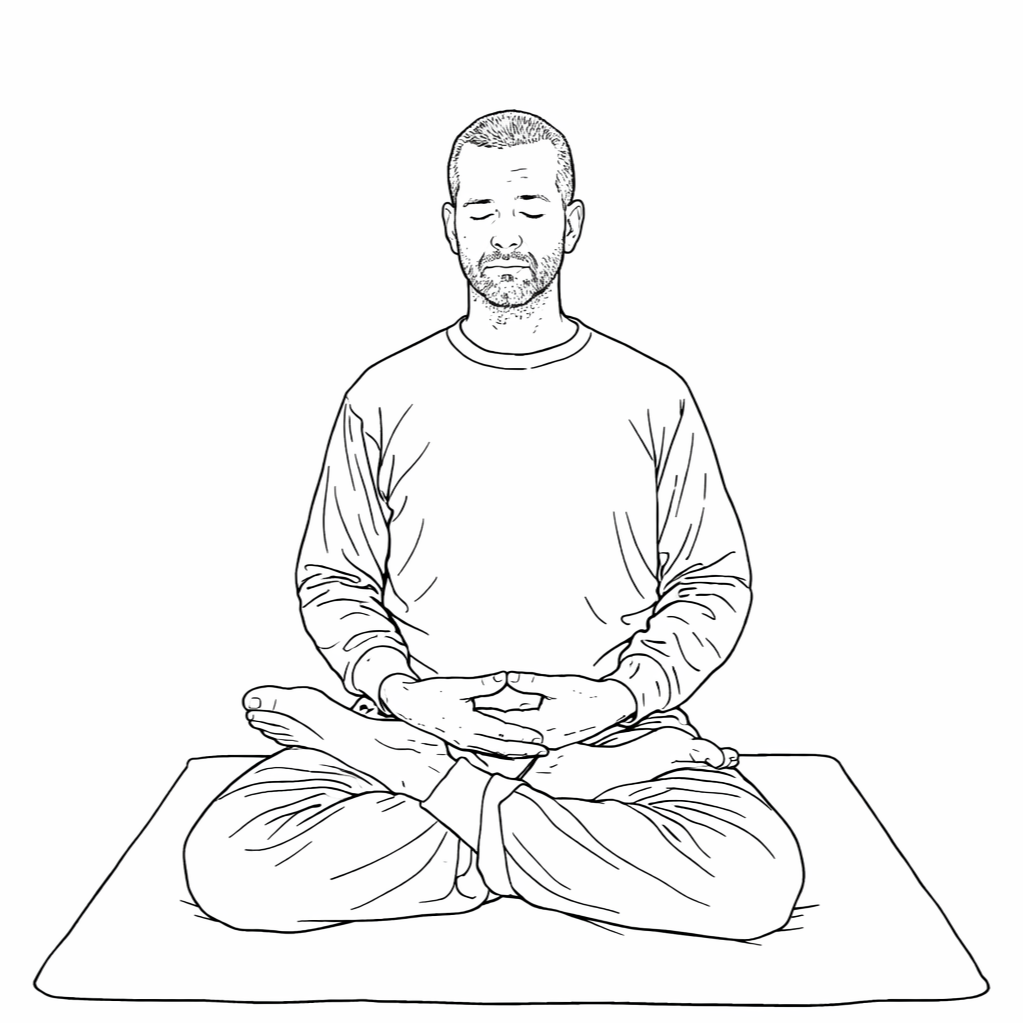
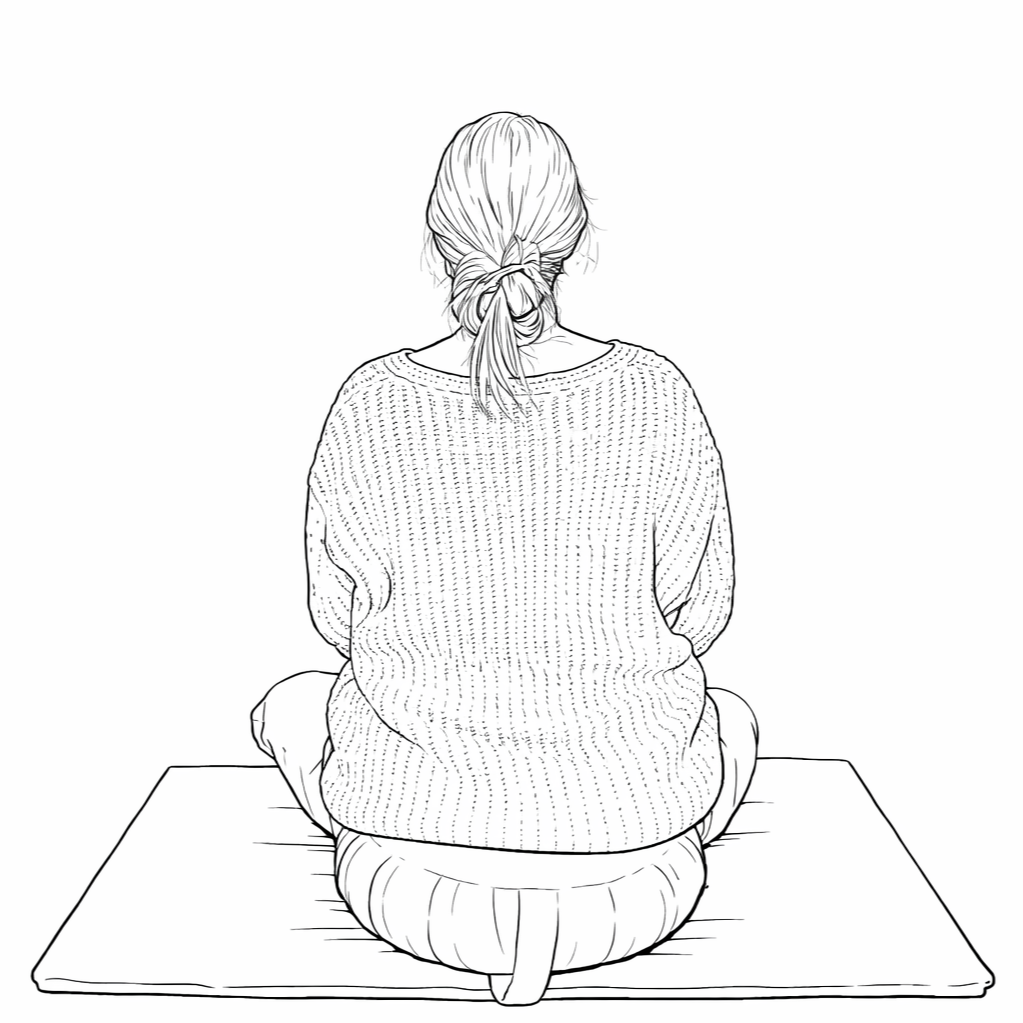
A variety of cross legged positions are possible. In the burmese style posture, the feet line up in front of the crotch. In half lotus position, one foot rests on the opposite thigh. Quarter lotus, which is not pictured, is when one foot is put on the opposite calf. In full lotus position, each foot rests on the opposite thigh. Full lotus is a challenging posture for most bodies and is not recommended for most beginners.
In all of these cross-legged positions, you always want to have the hips higher than the knees, and the knees touching the mat. If you sit in a cross legged position and your knees pop up and float in the air, this is likely to lead to tension and fatigue (pain) in the back and core muscles. This happens because of hip tightness. You may need to stack up more than one cushion to get the hips higher, and/or to work on getting more flexibility in the hips over time through yoga or other body practices. Don’t force the knees down as this can cause pain in the knees and put them at risk of injury, but you might place a support cushion underneath the knee(s) to get the ground closer to you. Just be sure that this doesn’t come at the cost of proper alignment higher in the body.
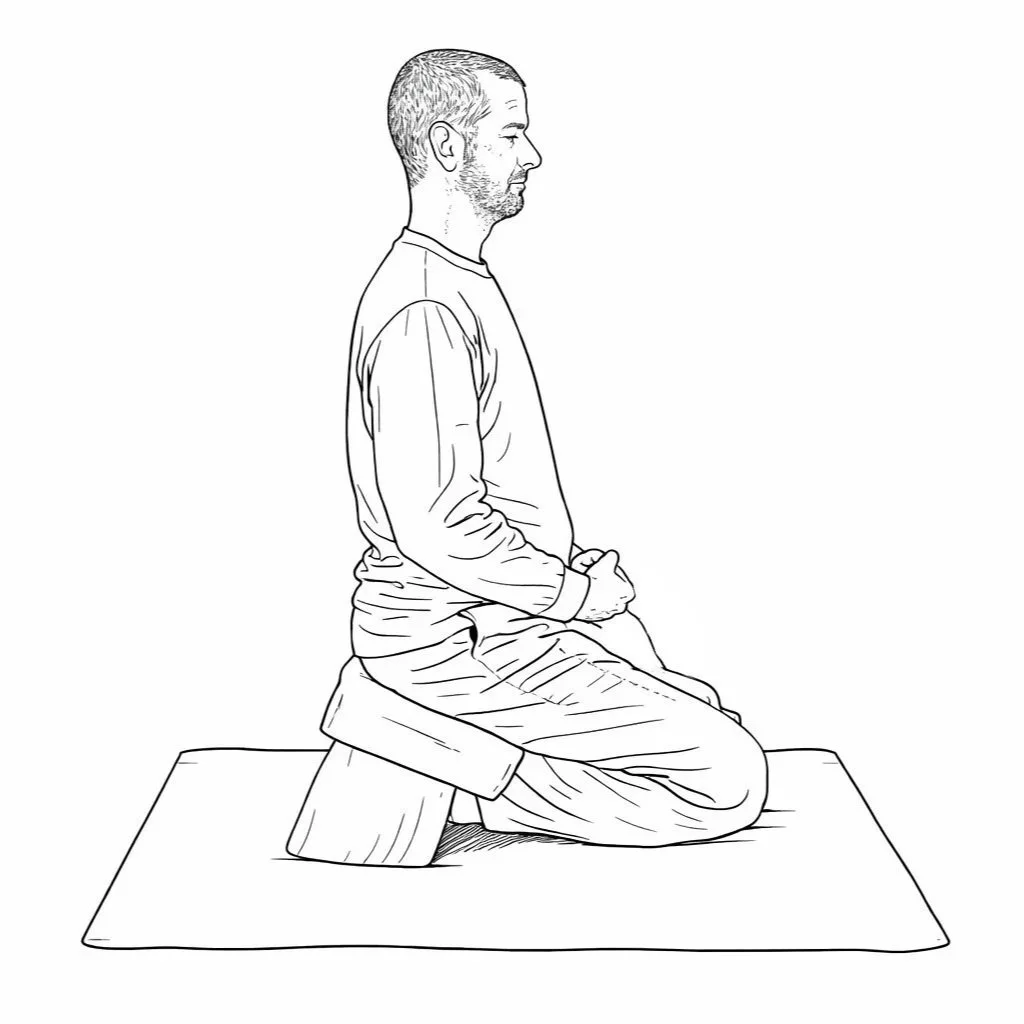
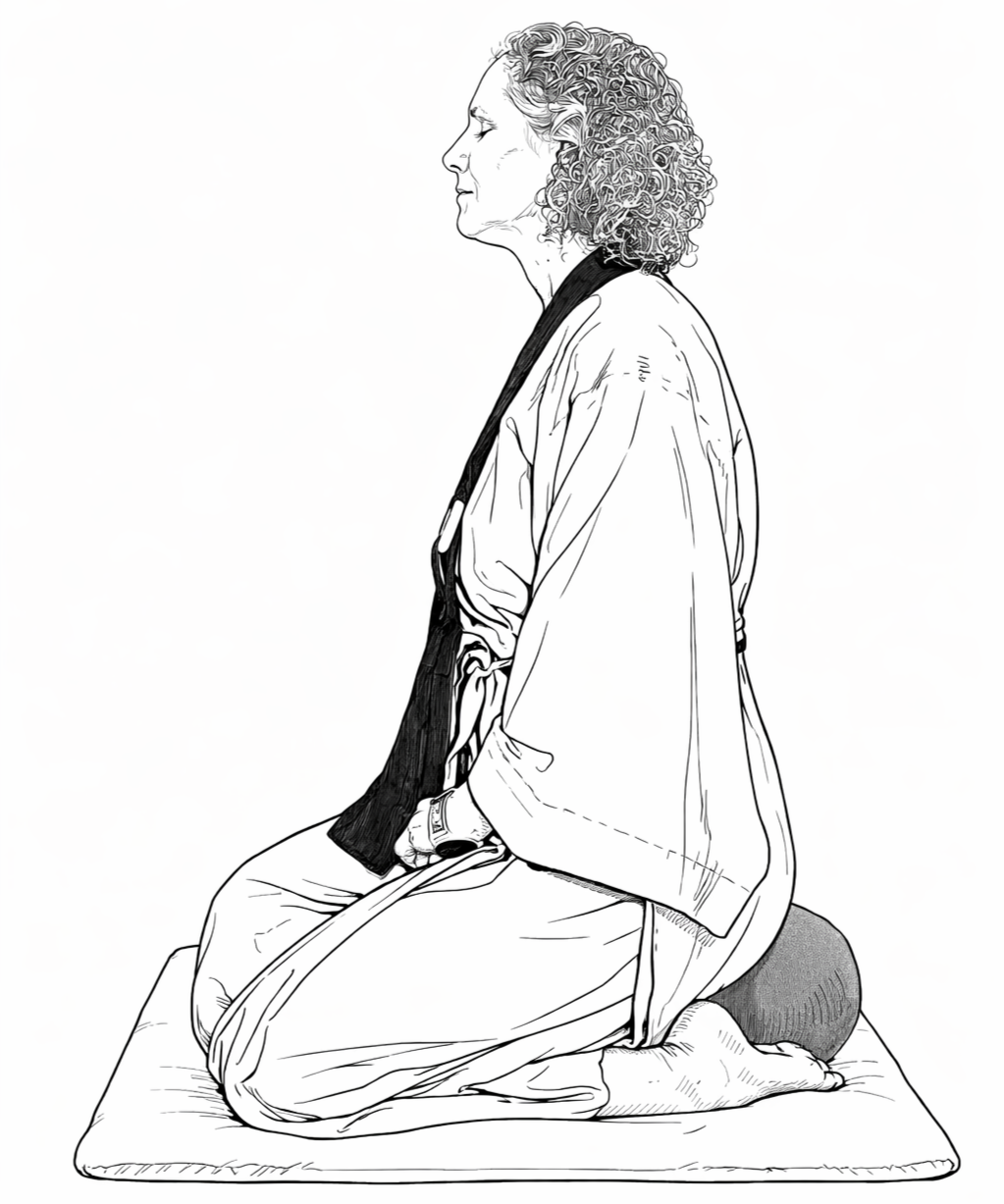
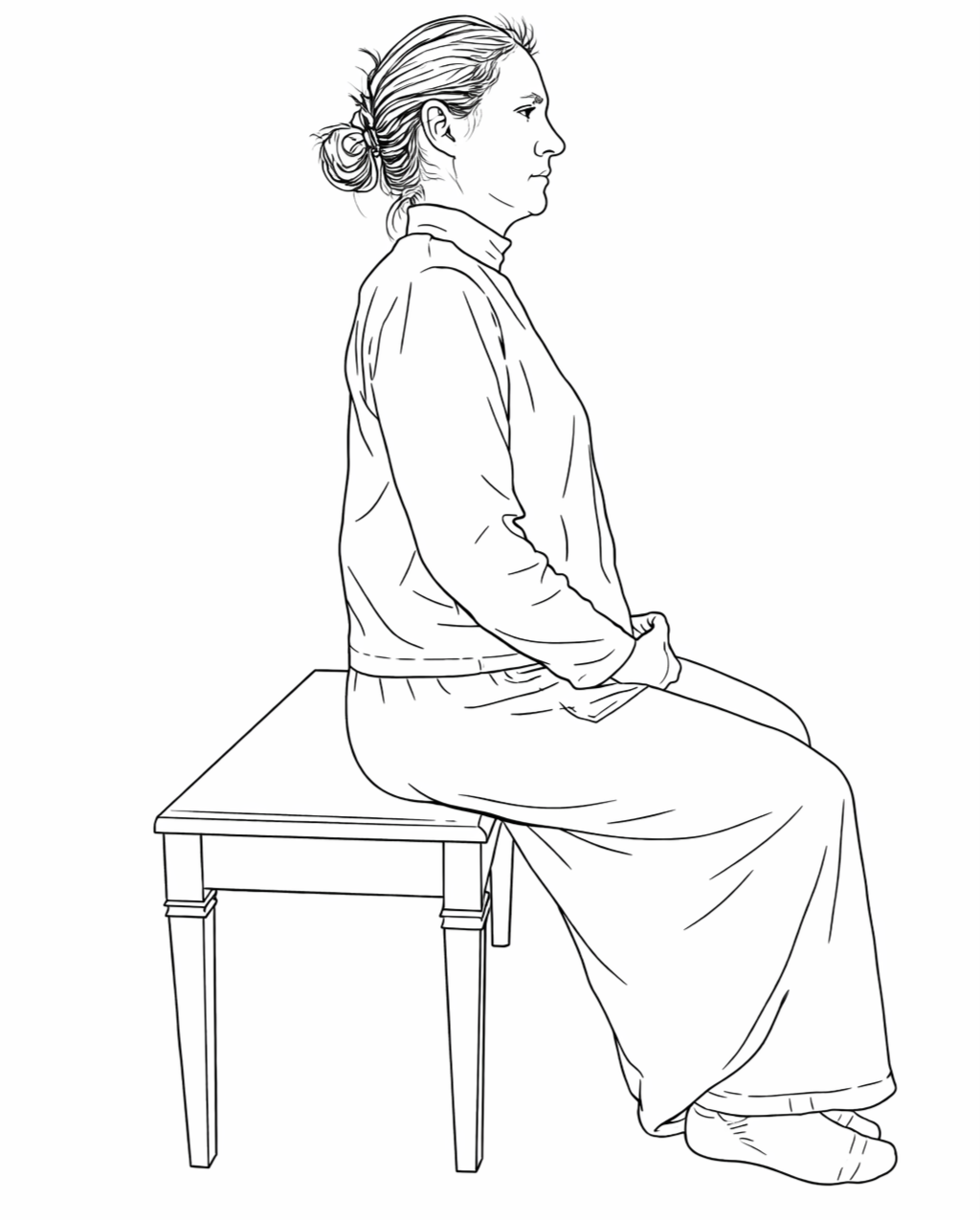
A kneeling posture can be appropriate for people without the hip flexibility to sit cross legged, or as a personal preference. To support a kneeling posture, you can use a zafu turned on its side, two zafus stacked up, or a bench made especially for kneeling meditation.
When sitting in a chair it is best to sit with an upright posture rather than leaning into the chair back. As with other postures, it is ideal to have your hips at least slightly higher than your knees. If you’re tall, you may need to sit on a cushion on top of the chair to lift the hips higher. Your feet should be flat on the floor. If you need to, place a cushion under your feet so that your legs aren't straining and your feet aren’t dangling.
Sit forward on the cushion, bench, or chair. If you find that one or both legs fall asleep and lose feeling while you sit, this is an indication that you should shift yourself further forward, as something is getting pinched and impeding blood flow. If a leg or foot is asleep, it's easy to fall so be sure to wait until feeling returns before trying to stand or walk.
What do I do with My Hands?
In Zen, we hold the hands in “cosmic mudra” while doing zazen. For many people, this mudra benefits the practice in physiological, metaphorical, and energetic ways. Try and see for yourself. Place the left hand into the right hand, and allow your thumbs to touch lightly.
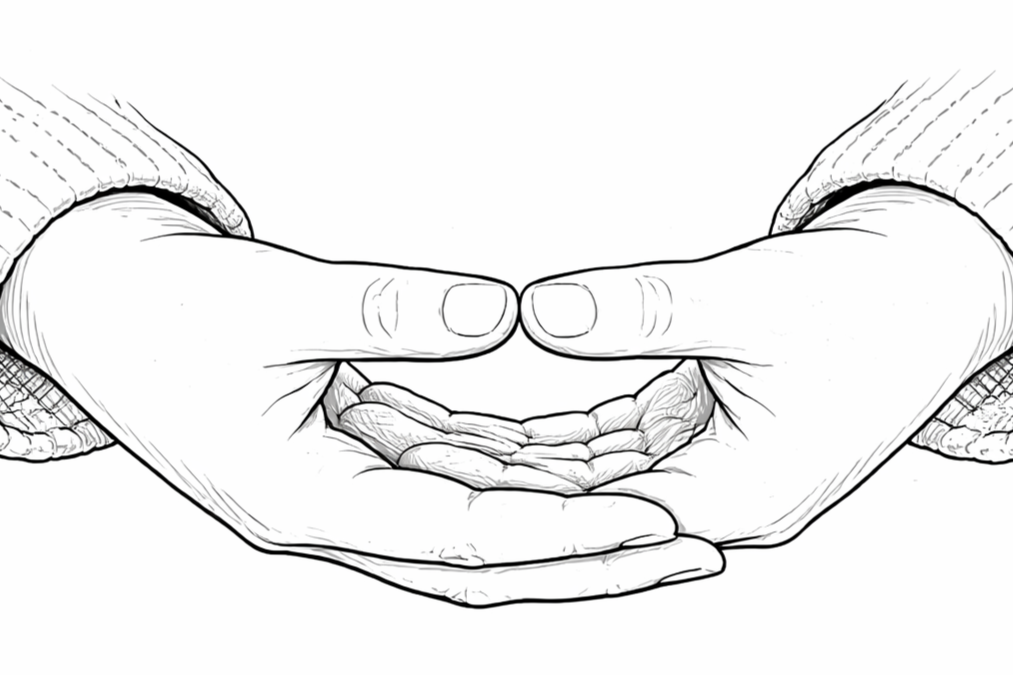
Just like the rest of the body, the hands should be resilient. You might imagine you're holding a small bird. Don't let it fly away, but don't crush it either. The hands are placed in the lap. In some postures and for some bodies, the hands can rest in the lap without pulling the shoulders downward or hunching up the spine. For many people in many postures, though, it is helpful to place a support cushion in the lap for the hands to rest on. This allows the spine to stay erect, the chest to stay open and the shoulders to relax.
Using the Eyes
The eyes are kept open but soft and downcast. Allowing some light into the eyes can help stave off drowsiness and keep the mind alert. When doing zazen we are not blocking anything out, so there is no need to close the eyes. Meido Moore, in his book Hidden Zen, describes this way of using the eyes as one does when looking over a vast mountain range, taking in the whole field of vision all at once without focusing anywhere in particular. Bring your attention into the edges of your peripheral vision, then allow your focus to relax from there.
Putting it all Together- Preparing to Sit
To begin a round of zazen, prepare your sitting area. Set a timer— ten to twenty minutes is appropriate for a beginner. Arrange your legs and take a moment to find alignment in the upper body. Bring your hands into cosmic mudra in your lap and soften the eyes.
Many people find it helpful at the beginning of a round to sway side to side, forward and back, or in gentle arcs, allowing the body to find its own alignment, relaxation, and resilience by feel. Once you've found a position that feels right, try to stick with it without moving for the duration of your meditation time. Committing to stillness in the body has a potent effect on practice. If you become uncomfortable, it can be very powerful to experience that discomfort without responding right away. You may notice your habitual patterns of dealing with discomfort and anxiety are not necessary. If you find yourself in sharp pain, though, it is important to respond and guard against injury.
Now What?
Now you’re in position. What next? In part two of this series, I will describe a basic nondual oriented breath practice. If you have any questions about posture or anything to add, please leave a comment. I would love to hear from you. And, again, you can listen to an audio version of these instructions on my podcast (see below), or download a pdf illustrated guide. Thank you for reading.
References and Resources
Much of what I have shared here comes from my own experience and learning over the past 17+ years of meditation practice. These kinds of instructions have been shared freely for thousands of years, and my teachers have shared them freely with me. These books may support you in learning more as you find your way with posture and practice.
The Three Pillars of Zen by Philip Kapleau
Hidden Zen by Meido Moore
The Posture of Meditation: A Practical Manual for Meditators of All Traditions by Will Johnson
Gratitude to my friends Steve Scholton and Susan Lillich for their help with the illustrations in this post.